
Weight Regain After Gastric Sleeve Surgery: Bariatric Surgeon Explains Step-by-Step Treatment Approach
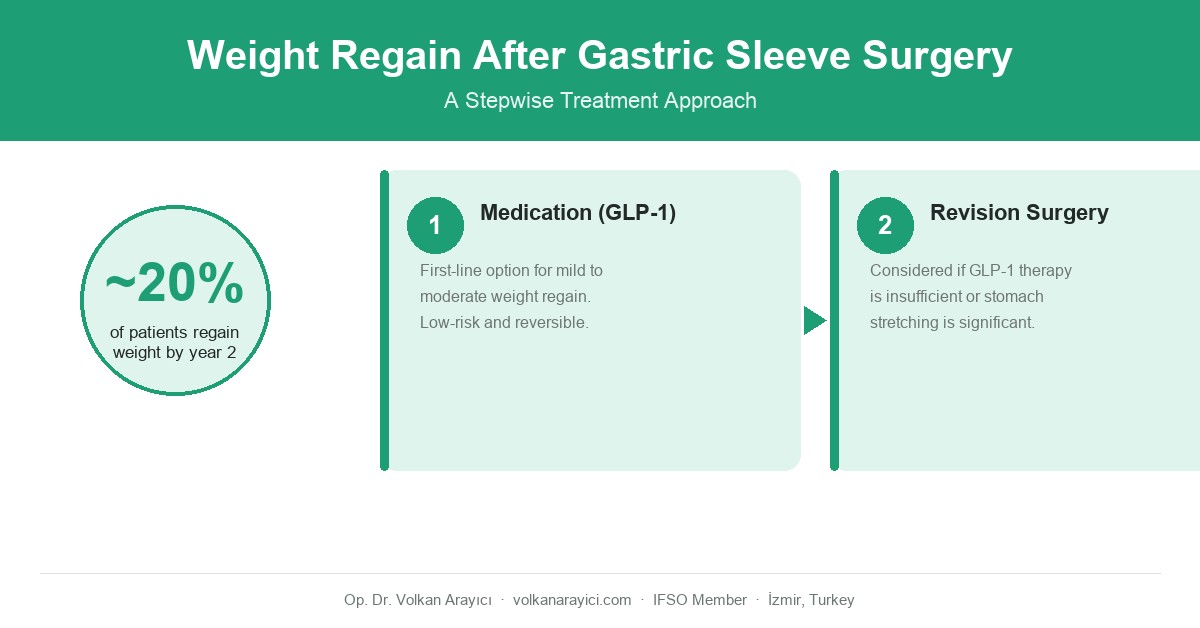
About 20% of gastric sleeve patients regain weight by year two. GLP-1 therapy and revision surgery are the two main treatment steps.
İzmir-based bariatric surgeon Dr. Volkan Arayıcı explains why up to 30% of gastric sleeve patients regain weight, and outlines GLP-1 and revision options.
According to Dr. Arayıcı, weight regain after gastric sleeve surgery is typically driven by several factors: gradual stretching of the remaining stomach tissue, adaptation of the satiety hormone system — particularly the hormone ghrelin — and a slowdown in resting metabolic rate over time.
"Patients experiencing this should not panic, but instead follow a stepwise treatment approach," explains Dr. Arayıcı. "In most cases, surgery is not the first step."
First Step: Medication-Based Therapy
For mild to moderate weight regain — ranging from a few kilograms up to 10 to 15 kilograms — Dr. Arayıcı says the first option typically considered is medication-based therapy with GLP-1 receptor agonists such as semaglutide or tirzepatide. This class of medication regulates appetite and slows gastric emptying, allowing the feeling of fullness to last longer.
"This therapy is a low-risk, reversible first step to try before considering another operation," says Dr. Arayıcı. However, its effect is tied to continued use of the medication.
Second Step: Surgical Revision
If a patient does not respond adequately to medication-based therapy, or if the weight regain is primarily due to significant anatomical stretching of the stomach, surgical revision may become necessary, according to Dr. Arayıcı. Two procedures are used in these cases: a so-called ReSleeve operation, in which the stretched portion of the stomach is reduced again, and conversion from a gastric sleeve to a gastric bypass, which may be indicated particularly when additional issues such as reflux or recurring type 2 diabetes are present.
"A revision procedure is anatomically more complex than the original operation, since scar tissue is already present. The experience of the treating surgeon is critical here," Dr. Arayıcı notes.
Note: This article is for general informational purposes only and does not replace individual medical consultation, diagnosis, or treatment. Patients with health concerns should consult a qualified physician.
About Op. Dr. Volkan Arayıcı
Op. Dr. Volkan Arayıcı is a specialist in bariatric and metabolic surgery based in İzmir, Turkey. He has focused exclusively on gastric sleeve, gastric bypass, and revision surgery since 2014 and is a member of the International Federation for the Surgery of Obesity (IFSO). More information: volkanarayici.com
volkan arayıcı
op.dr.Volkan arayıcı
+90 532 466 67 67
email us here
Visit us on social media:
Instagram
YouTube
GASTRIC SLEEVE TURKEY | CHELSEA'S EXPERIENCE ON DAY 3 WİTH HER MOTHER DAWN
Legal Disclaimer:
EIN Presswire provides this news content "as is" without warranty of any kind. We do not accept any responsibility or liability for the accuracy, content, images, videos, licenses, completeness, legality, or reliability of the information contained in this article. If you have any complaints or copyright issues related to this article, kindly contact the author above.
